"Psychedelics Refresh Thinking Processes" | Interview with DAVID NUTT, PhD
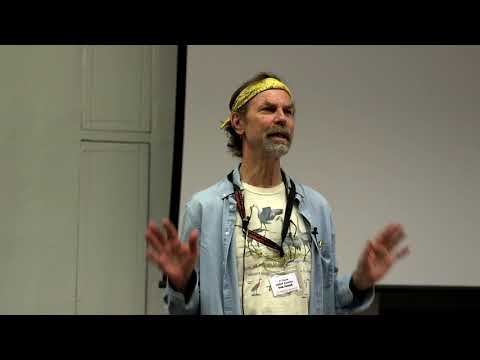
DAVID NUTT, PhD is Professor of Neuropsychopharmacology at the Imperial College London, UK.
Recorded at the Interdisciplinary Conference on Psychedelic Research David Nutt (ICPR) 2022, in Haarlem, The Netherlands.
GET YOUR ICPR 2024 TICKETS NOW!
VISIT: https://www.icpr-conference.com/
Filmed by Drugreporter - Rights Reporter Foundation
Reporter: Péter Sárosi
Video: István Gábor Takács
https://drugreporter.net
Questions:
0:00 Intro
0:05 What will be the heritage of this psychedelic renaissance?
2:26 Can the pharmaceutical industry use psychedelics as modern medicines?
4:23 Can we separate the hallucinogenic effects of psychedelics from the medical benefits?
6:44 What's your view on microdosing?
7:59 How do psychedelics, such as psilocybin compare to traditional antidepressants in treating depression?
10:30 What about Ketamine? How does it compare to psilocybin, how does it affect the brain, and how does it treat depression?
13:05 Can these substances be used outside of their traditional contexts, as modern medicines?
14:52 How do you see the future of psychedelics? What role will they play in mainstream mental health care?
16:10 How can we overcome the scepticism of the general public and scientists, regarding psychedelics?
DAVID NUTT, PhD is Professor of Neuropsychopharmacology at the Imperial College London, UK.
Recorded at the Interdisciplinary Conference on Psychedelic Research David Nutt (ICPR) 2022, in Haarlem, The Netherlands.
GET YOUR ICPR 2024 TICKETS NOW!
VISIT: https://www.icpr-conference.com/
Filmed by Drugreporter – Rights Reporter Foundation
Reporter: Péter Sárosi
Video: István Gábor Takács
https://drugreporter.net
Questions:
0:00 Intro
0:05 What will be the heritage of this psychedelic renaissance?
2:26 Can the pharmaceutical industry use psychedelics as modern medicines?
4:23 Can we separate the hallucinogenic effects of psychedelics from the medical benefits?
6:44 What’s your view on microdosing?
7:59 How do psychedelics, such as psilocybin compare to traditional antidepressants in treating depression?
10:30 What about Ketamine? How does it compare to psilocybin, how does it affect the brain, and how does it treat depression?
13:05 Can these substances be used outside of their traditional contexts, as modern medicines?
14:52 How do you see the future of psychedelics? What role will they play in mainstream mental health care?
16:10 How can we overcome the scepticism of the general public and scientists, regarding psychedelics?






)
Just wondering if Mr David Nutt tried mushrooms? Hmm… I asking in good point of view.
If you are a merely bit jaded although otherwise sound, but people who have certain mental illness propensities oft times tend to massively over self medicate with psychedelics.
"psychiatry is failing…." Yeah, that's the understatement of the last 30 years
Turn on, tune in, drop out. I did.
David Nutt regularly tells first year college kids in his presentations that MDMA and other similar drugs are safe. Sure, he publishes about it too, where he adds caveats. But he also regularly encourages teens to indulge. And I'm saying this as an advocate, myself. Now do you still wonder why he was fired from his govt position? Nevermind that he oversimplifies all the science in favor of quick quips, and constanly overstates the significance of his research… oh, and calling alcohol the most dangerous of all drugs, above fentanyl, in a ditch effort to promote your crappy fake alcohol replacement nobody wants Alcosynth. yeah, no thanks "Dr." Nutt. maybe when you actually publish data on that instead of just corralling a bunch of "Experts" to a roundtable to rate on a scale from 1-10 how bad every drug on the list is. Anybody calling that science is a scam artist or has no brain cells left. Anybody researching the topic of psychedelics, do yourselves a favor and steer clear of David Nutt and friends. Their research isn't even well-regarded in the community. There is much, much higher quality research founded on less meaningless hyperspeculative bases being done out there.
David Nutt is a breath of fresh air in advocating for the therapeutic use of hallucinogenics. Brain dead conservatives have managed to frighten a gullible public into thinking they're dangerous. Another factor in the neglect of this valid research is opposition by pharmaceutical corporations who've monopolized the market to ensure their treatment methods are prioritized by corrupting politicians with campaign money.
The statement that psychedelics "refresh" the brain is only partially accurate. These remarkable agents "restructure" not the brain so much as the neural connections that underpin and totally correspond to all conscious thought. If anything can be thought or considered it's because a network of patterned brain cell connections make it possible. There are no exceptions to this. All that we know about ourselves, others, the world, including all our past experience is stored in a retrievable network of patterned associations and interactive nerve cells.
We can liken our brains and these neural networks to a Christmas tree as large as the continental United States with no less than 80 billion lights that can not only display an unending combination of light patterns, but can also originate new and novel patterns never seen before. With so many possible combinations the amount of new patterns being able to form is theoretically unlimited.
We all have these neural networks that are either latent or active. If I say "dog" your brain on hearing this will draw up from associated memory the image of a dog, perhaps yours if you have one. That image of your dog is brought to your conscious attention only because a related pattern of neural connections is and was present in your brain. So much for this. So how are hallucinogenics so effective in treating psychological disorders? The reason is because of the fact that everything about who we are including all our addictions, our alcoholism, our depression, rape trauma, PTSD and all psychological disorders depends totally on the related neural patterns strongly associated with these maladapted behaviors.
Our brains "know" these forms of behavior are harmful and have the capacity to "delete" these neural patterns and hence eliminate the harmful effect on our lives. This gossamer thin, nearly incorporeal neural pattern of cellular activity can be tweaked or slightly adjusted to a point where neural energy is no longer directed into those areas of the brain that produce an addictive response.
Saying that all we are is the result of an encoded pattern of interrelated brain cell activity may sound deterministic and antithetical to human freedom but this is a false assumption. It merely affirms the fact that our brains are malleable and plastic.
Hallucinogenics seem to have the ability to slightly alter the neural patterns that have formed as a result of trauma, addiction, or abuse without damaging other areas of stored neural information that are healthy and normal.
We think of ourselves and our personalities as if they were hard and durable, based on a strong sense of self identity, but any self observant person soon knows that his moods and different states of mind are subject to many influences.
Psychedelic agents allow the patient to re-conceptualize his life without the pain, emotional trauma or addictive behavior that brings the suffering associated with these conditions.
Was at ICPR 22 and will be back this year, these kinds of videos are great to help ease the eager anticipation, thanks!
Are you studying Amanita Muscaria? As a GABA agonist it doesn't classify as a psychedelic; muscimol is also legal so the red tape surrounding these trials shouldn't apply to fly agaric compounds. There are however some very interesting effects found as a result of consuming the mushroom that are clearly distinct from classical psychedelics.